Why Spring Is the Worst Drainage Season
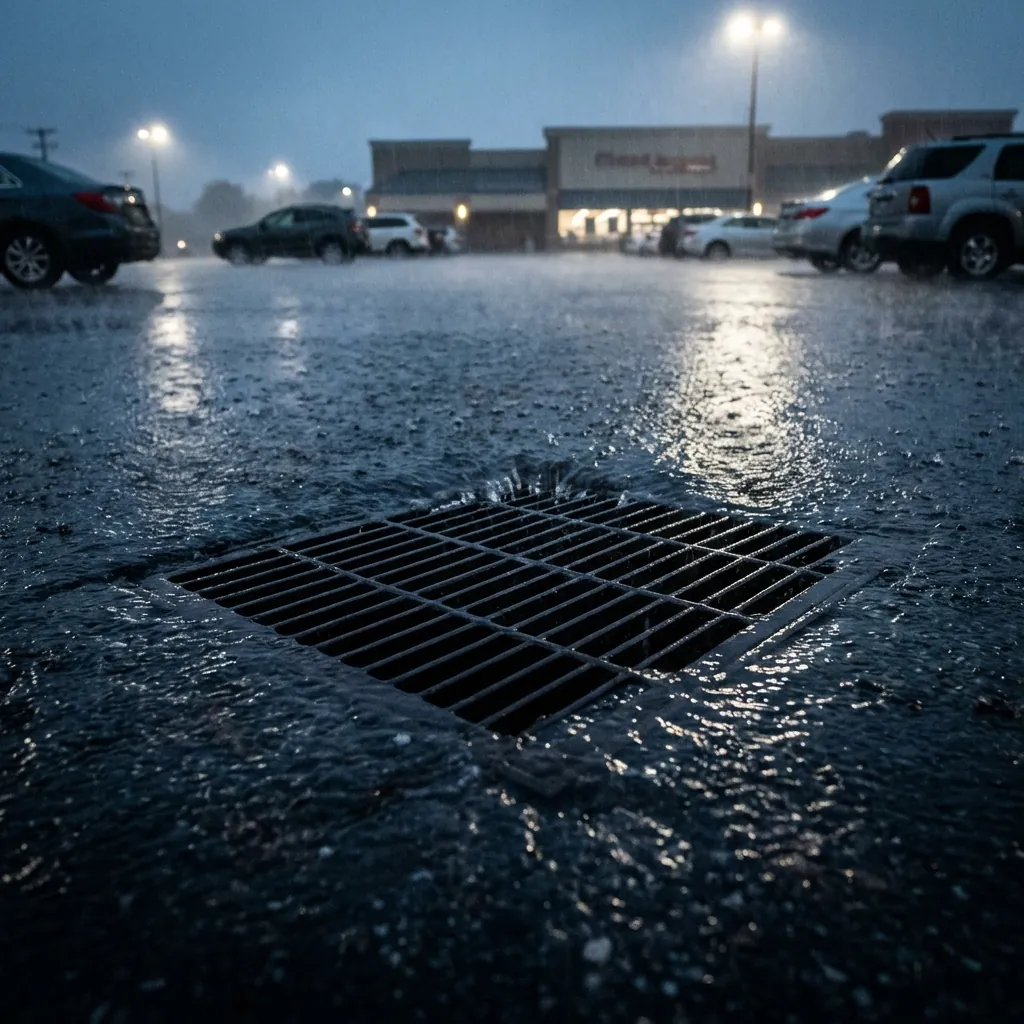
Most homeowners intuitively associate drainage problems with summer thunderstorms or fall rain events. Those events matter, but the volume and duration of water that a typical Treasure Valley yard deals with during spring is multiple times larger than any single storm event of the year.
A typical Boise winter deposits somewhere between six and twelve inches of liquid-equivalent precipitation as snow. That water is stored on the ground until melt begins. When it melts, it moves as a combination of surface sheet flow and subsurface migration: and the rate of movement is often higher than anything the yard has to handle the rest of the year.
A summer thunderstorm that drops half an inch of rain puts less water on your yard than a single warm day in late March. The difference is that the thunderstorm is visible and the snowmelt is continuous and quiet.
The Frozen Subsoil Mechanism
The single most important concept in spring drainage is the difference between surface soil and subsurface soil during the thaw.
In early to mid spring, the top few inches of soil thaw first: warmed by sun, air temperature, and melting snow sitting on top of it. But the soil from roughly six inches down to two or more feet remains frozen or partially frozen for weeks longer. This creates a two-layer system: thawed, saturated topsoil sitting on a frozen, impermeable subsurface.
The consequence is that melt water cannot drain downward. It has nowhere to go vertically, so it moves laterally through the top few inches of soil. That lateral movement is exactly what loads foundation walls, fills window wells from the outside, and concentrates water against any below-grade structure.
Homes that stay dry all summer and fall, and then leak reliably every March or April, are almost always expressing this frozen-subsoil dynamic. The fix is rarely about the foundation wall. The fix is about controlling the lateral pathway.
Why Melt Timing Matters More Than Total Snow
Homeowners often assume a big snow year is a bad drainage year and a small snow year is a safe one. The data does not support that. Two factors matter more than total snow: how fast it melts, and how frozen the ground still is when it does.
A slow, cold melt in March lets the ground thaw incrementally and absorb water at a manageable rate. A fast, warm melt in February or early March, with frozen subsoil still in place, produces the worst-case scenario: high melt volume, no absorption, sheet flow across yards.
This is why a 75 percent snowpack year with a fast warm melt can produce significantly more residential water damage than a 130 percent snowpack year with a slow cold melt. Total water in is the same. The difference is how fast it moves and what the ground was doing when it moved.
The 2026 season, where snowpack peaked three weeks early and melted almost immediately, is an example of the first pattern, in an unusually low-snow year. We cover that specific year in detail in our 2026 drought-to-downpour analysis.
How Treasure Valley Clay Makes It Worse
Most of the Treasure Valley sits on clay-bound soils, and much of the developed area of Boise, Meridian, Eagle, Nampa, and Caldwell sits above or near caliche: a compacted, cement-like soil layer that can be nearly impermeable.
Clay soils have two relevant properties for spring drainage. First, they drain slowly: water that enters the soil moves downward at a fraction of the rate it would in sandy soil. Second, they expand when wet and contract when dry. In the spring, clay soil that was slightly contracted through winter rehydrates and expands, which can increase lateral pressure on foundation walls even when there is no direct water contact.
Caliche compounds the problem by preventing meaningful vertical drainage at all. Water that enters the soil from above hits the caliche layer and moves laterally along it: often toward the home, because home foundations typically sit in excavated, somewhat better-draining fill material that acts as a preferential pathway.
Homes in parts of the Boise Bench, western Meridian, and much of Nampa are particularly exposed to this dynamic.
Where Snowmelt Water Actually Goes
During a typical Treasure Valley spring, melt water on a residential lot follows a predictable path. It comes off the snowpack and roofs simultaneously, which means homes generate two overlapping runoff streams.
Roof melt runs into gutters and discharges through downspouts: concentrating hundreds to thousands of gallons at whatever point the downspouts deposit water. Yard melt moves across the lawn and concentrates in low spots or along grade lines.
Both streams, if not actively managed, converge at the foundation perimeter because the foundation is typically the lowest adjacent point on the lot. From there, water either enters the home at a weak point, a cove joint, a window well, a basement door threshold, a crawl space vent, or it loads the foundation wall with hydrostatic pressure until the wall finds its own weak point.
The common denominator is that snowmelt concentrates rather than disperses. Without active drainage design, the foundation perimeter is where that concentration lands.
Home Patterns Most Exposed to Snowmelt
After working on Treasure Valley homes through many spring seasons, certain patterns correlate strongly with spring-specific problems:
Homes with finished basements and no exterior drainage
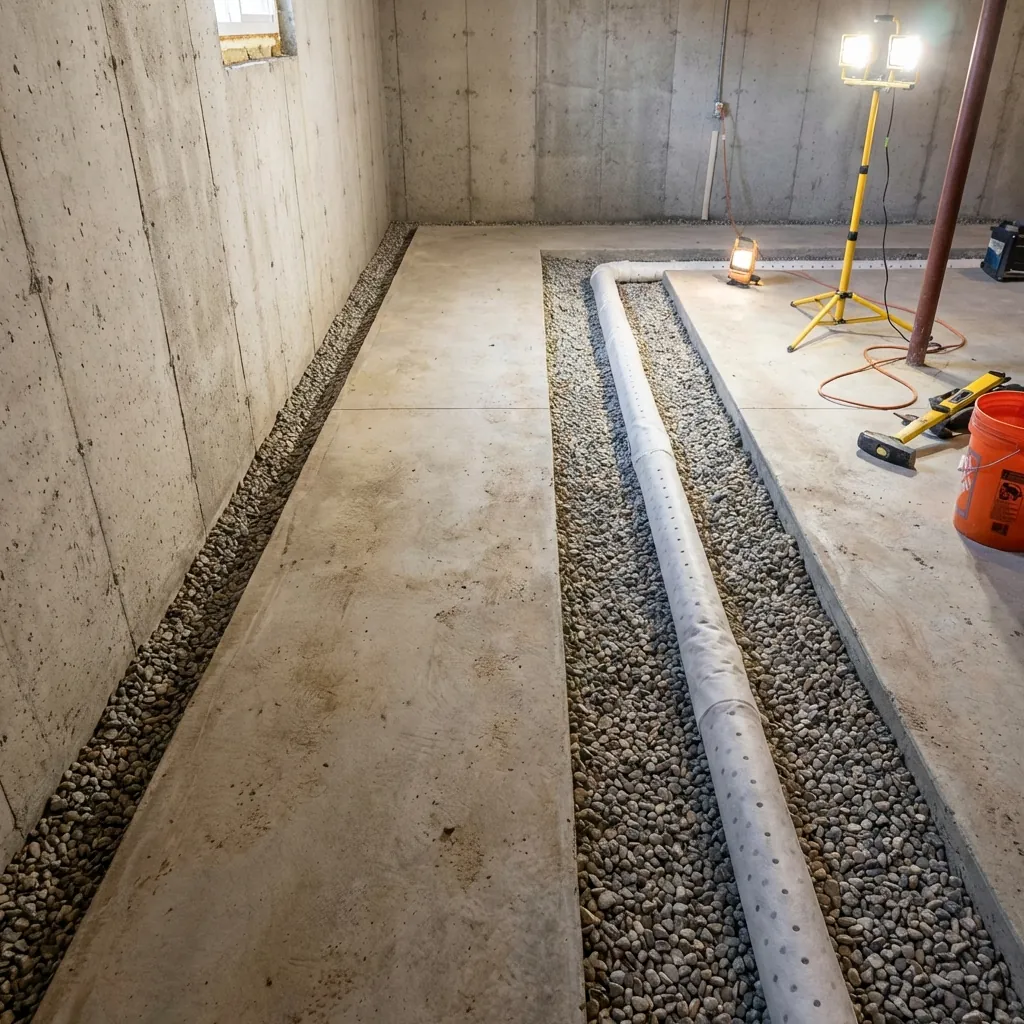
If the only drainage defense is an interior perimeter drain and sump, spring snowmelt routinely overloads the system because interior systems are designed to handle what already made it inside, not to prevent the exterior approach.
Homes with window wells below grade
Window wells act as built-in low spots against the foundation. Without proper covers, drainage, and perimeter grading, they fill with melt water and become the direct entry point for basement leaks.
Homes with downspouts that discharge at or near the foundation
Every downspout is a concentrated point source. In winter, most downspouts freeze partially, which can redirect water along the gutter and down the siding: so homes with short or malfunctioning downspouts often do not even benefit from their gutters during early spring.
Homes on or near slope transitions
Foothill-adjacent homes, lots where the original grading pitched toward the house, and homes downhill from larger lot areas all receive concentrated lateral runoff during melt.
Homes with crawl spaces and uncovered vents
Melt water can enter crawl spaces through vents that sit at or below grade, producing standing water that has nothing to do with groundwater rise.
Older homes with degraded grading
Original grading degrades over decades. Many Boise homes older than thirty years have lost enough perimeter pitch that the immediate foundation zone is now flat or sloped the wrong way.
Design Principles That Handle Snowmelt
A drainage system that handles a normal Treasure Valley spring well is built on a small number of non-negotiable principles:
Move downspout water at least ten feet from the foundation, ideally further
This is the single highest-leverage design choice in any residential drainage setup. Buried downspout extensions to daylight, or tied into a dedicated drain line, consistently outperform every other single intervention.
Maintain positive grade for the first ten feet
The immediate foundation zone should pitch away from the house at roughly six inches of drop over the first ten horizontal feet. That single detail prevents more water intrusion than any other grading decision.
Intercept uphill water before it reaches the foundation
On any lot where water approaches the house from uphill, a French drain or similar interception system installed on the uphill side carries that water around the home instead of into it.
Protect window wells and basement entries
Clear covers, internal drainage, and perimeter grading that diverts surface water around the well rather than into it are essential on any home with below-grade window openings.
Seal and slope crawl space access
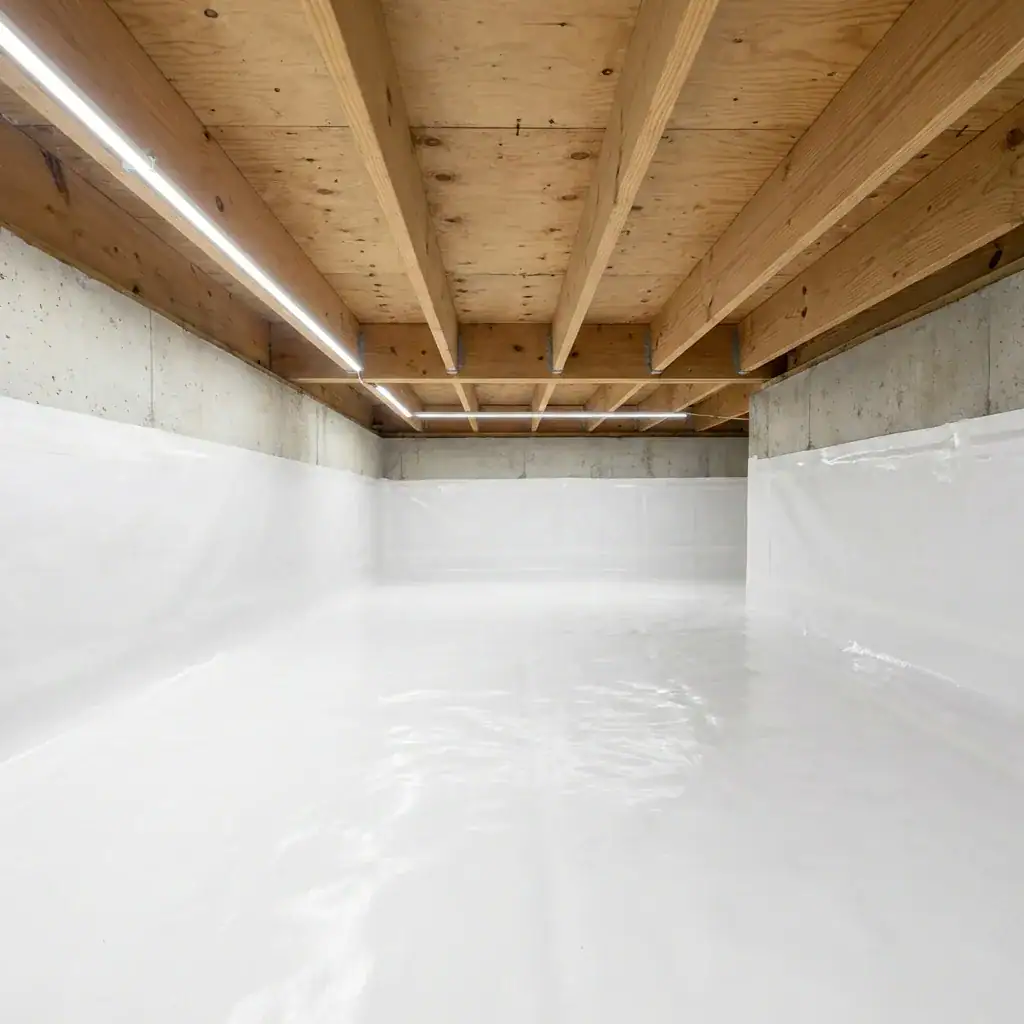
Vents, hatches, and thresholds should sit above the local grade, and the surrounding yard should drain away from them. Where this is not possible, crawl space drainage and encapsulation are often the right scope.
Combine exterior and interior systems where conditions warrant
For high-exposure homes, the right defense is typically an exterior interception drain plus a functional interior perimeter drain and sump: so that water is managed at both lines of defense.
A Note on Atypical Years Like 2026
The principles above handle normal Treasure Valley springs reliably. Atypical years like 2026, where drought, early melt, and concentrated storm events stack together, can still stress even well-designed systems, because the storm-event profile is different from the snowmelt-event profile those systems were built for.
In years like this, the most exposed homes are the ones that were previously marginal: minor existing drainage weaknesses that were never expensive enough to show up under normal conditions. The good news is that atypical years also produce the best diagnostic data, because weak points that were invisible under normal loading become visible fast.
If your home revealed a weakness during the 2026 spring, whether it was visible yard pooling, interior water, crawl space moisture, or foundation-adjacent erosion, documenting the exact pattern now and scheduling an assessment before the summer construction season is the highest-leverage thing a homeowner can do. We map the full water pathway, write a scope based on what happened rather than on generic spring assumptions, and prioritize the work in the order that produces the most protection per dollar. In drainage, the best defense is always a system designed for the actual water your specific lot handles, not for a generic model of spring.