The 2026 Anomaly in One Sentence
2026 is dry soil being hit with concentrated wet events, which is the worst possible combination for residential drainage. Not wet, not dry, but both at once on a soil profile that cannot absorb water.
Normal Boise springs give soil a gradual melt, steady saturation, and time to accept water. 2026 is giving soil no meaningful melt, months of dry cracking, and then sudden heavy rain events on a surface that behaves more like pavement than topsoil.
What Actually Happened This Winter
Idaho’s 2025–2026 snow season broke several patterns at once. Snowpack peaked on approximately March 17, roughly three weeks earlier than the historical average peak date, and then began melting immediately. By the first week of April, every one of Idaho’s 44 counties had been placed under a drought emergency declaration, and forecasts for the Boise and Snake River systems projected a significant chance of irrigation shortfalls through the summer.
That part has been in the news. What has been less discussed is what happens to residential soil when a winter ends that way. The normal Boise drainage calendar assumes a slow, cold melt that keeps topsoil damp and receptive through April. 2026 gave us the opposite: a fast early melt that ran off before the soil could absorb most of it, followed by several weeks of unseasonably dry conditions that let the upper soil profile dry out and harden.
By mid-April, soil across much of the Treasure Valley was behaving as if it were late July, not early spring.
Why Drought Makes Soil Reject Water
There is a concept in soil science called hydrophobicity. When clay-bound soils dry out past a certain threshold, the soil particles develop a water-repellent surface layer. Water that lands on hydrophobic soil does not soak in the way homeowners expect: it beads up, runs off laterally along the surface, or pools in low areas without meaningfully penetrating the root zone.
The Treasure Valley’s soil is particularly prone to this because of its clay content. A dry summer alone can create modest hydrophobicity. A dry summer followed by a near-zero-moisture winter, which is close to what 2026 has delivered in much of the valley, produces extreme hydrophobicity across broad yard areas.
The practical result is that rain which would have soaked in during a normal spring is now running along the surface until it finds a low point. For most Boise homes, the lowest point near the house is the foundation perimeter, the window well, or the top of the basement stairwell.
The April 2026 Storm Sequence
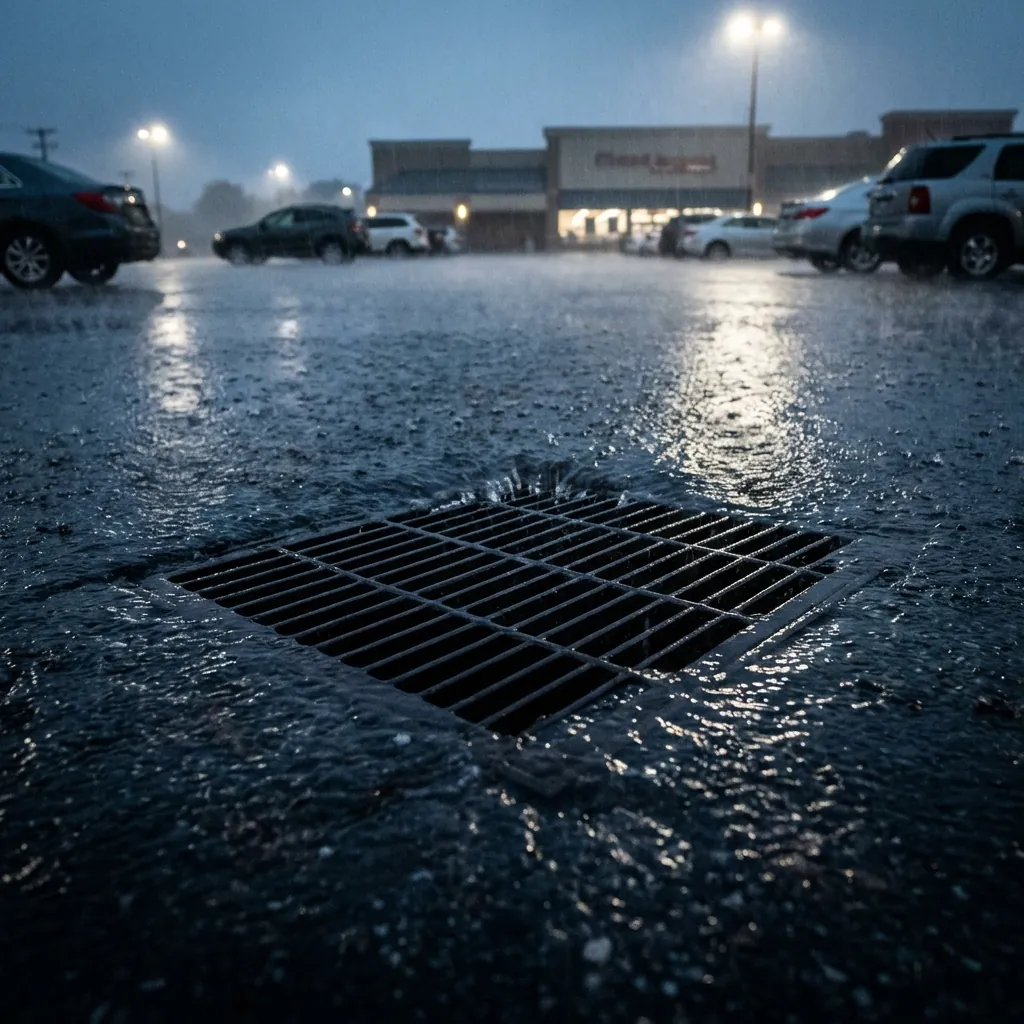
Between April 1 and April 17, 2026, the valley received three distinct rain and storm events that would normally be considered unremarkable individually but that stacked on top of drought-hardened soil became a drainage stress test.
The first came in the opening days of April: a steady, moderate rain that in a normal year would have been absorbed almost entirely by yard soil. In 2026 it produced visible runoff on flat lawns.
The second came around April 10: another moderate event with some localized intensity.
The third, on April 16, delivered approximately half an inch of rain in Ada County along with soft hail and an unusually high lightning count for the date. This event produced the call volume spike we have been responding to all week.
Any one of these storms in a normal spring would have been a non-event for most homes. Stacked onto soil that was already rejecting water, the cumulative runoff has been showing up as basement seepage, crawl space standing water, and yard flooding in homes that have never had problems before.
What We Are Seeing in Homes Right Now
The call pattern this week is unusually consistent. A few patterns worth naming because they tell you whether your home is at risk:
Homes with finished basements built between 2008 and 2018
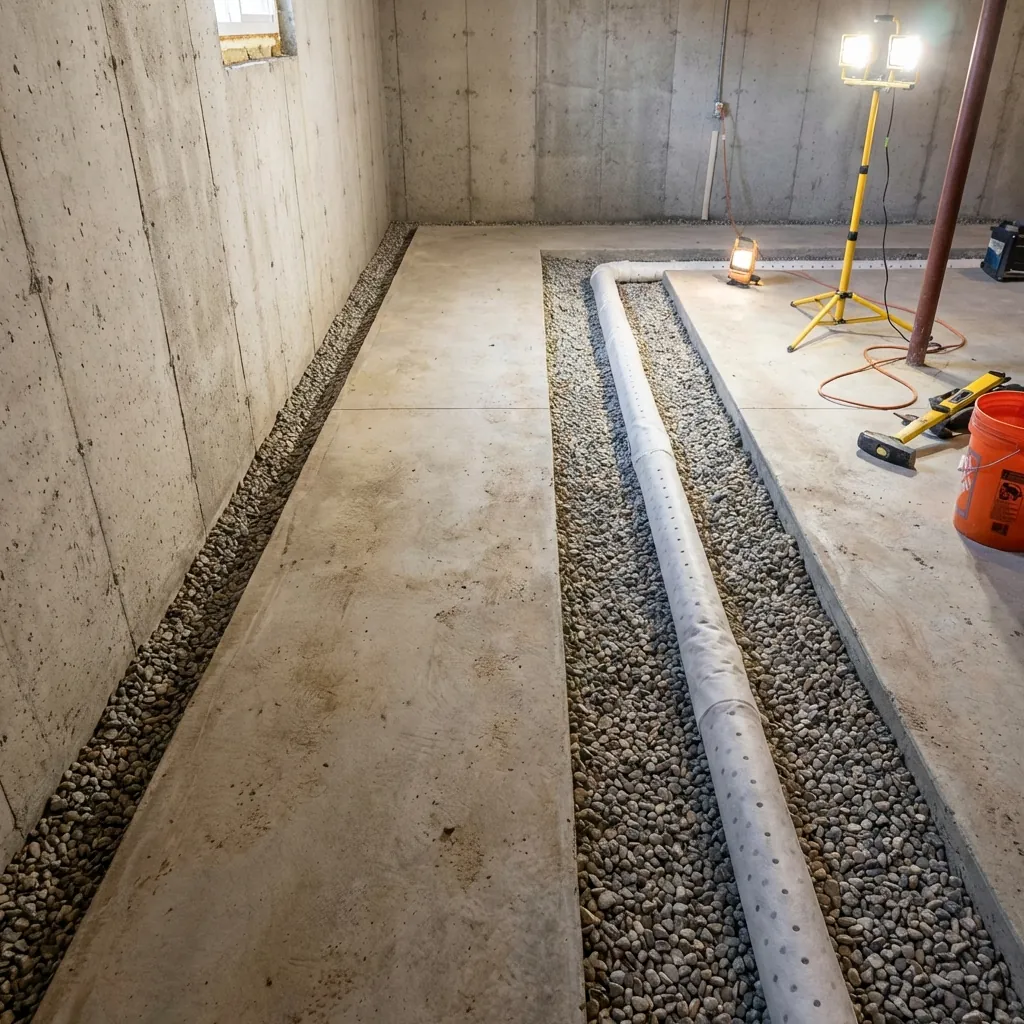
are generating a disproportionate number of active leak calls. This generation of Boise builds frequently used perimeter interior drainage and sump systems that were sized for typical spring loads, not for concentrated surface runoff events. When soil rejects water and that water instead runs as a sheet toward the home, these systems can be overwhelmed at the entry point, a window well, a walkout door threshold, or a cove joint, before the interior system can move it.
Homes with crawl spaces
are seeing standing water with no plumbing leak to blame. In most of these cases the water has traveled along the surface, found an access vent or a crawl space hatch, and entered from above rather than rising from below. The fix pattern is different from groundwater intrusion and starts with the exterior approach.
Homes with new landscaping installed in 2024 or 2025
are over-represented in yard flooding calls. Fresh landscape beds with thick mulch layers tend to float and migrate during sheet-flow events, and new sod or plantings have not yet developed the root structure to help anchor soil.
Homes that have never had drainage problems before
are the most common new call source. Drought-hardened soil changes the rules for any home whose landscaping was designed around normal absorption rates.
Why Your Yard Is Wetter Than a Normal Spring
If your yard is visibly wetter right now than in past springs, the sequence is almost always this: your soil dried more than usual through the summer and winter of 2025, it developed a hydrophobic surface layer, the April storms are now running on top of that layer instead of soaking in, and the runoff is concentrating in low spots: some of which are near your foundation.
This is a sign that the soil conditions your landscaping was designed around have temporarily changed. The original grading is probably fine.
The condition is also not permanent. One or two cycles of meaningful rain, followed by normal irrigation, typically restore soil absorption. But the recovery window matters: because the April storms and early May irrigation season are happening during the worst of the hydrophobic phase, not after it.
What to Do This Week
If you currently have active water in the home, a wet crawl space, or standing water within ten feet of the foundation, the priority order is always: stop the water at the source, move it away from the home, and only then address what is inside.
Walk your downspouts first
In drought-hardened-soil conditions, downspout extensions become even more valuable than normal. Any downspout depositing water within three to six feet of the foundation is contributing disproportionately to the problem right now. Temporary extensions, even corrugated flexible pipe laid across the grass, meaningfully reduce foundation loading while longer-term solutions are planned. Our downspout drainage extension workflow is built for exactly this scenario.
Look at the ground around each window well
Window wells are the single most common entry point during April events because they are a built-in low spot adjacent to the foundation. Debris in the well, a missing or damaged cover, or soil that has eroded into the well all worsen the problem.
Check your yard for visible runoff channels
Narrow bare-soil tracks, mulch that has migrated, or freshly exposed landscape fabric all tell you where water is currently moving. That information is diagnostic: it shows you the actual pathway water is taking, which often is not the pathway the original landscaping designed for.
If there is active interior water, document it
Photos with timestamps, and a note of what storm or irrigation cycle immediately preceded the leak, are the single most useful input to a drainage diagnosis. For an active scenario, start with our foundation leak repair overview.
Do not over-irrigate to “fix” the soil
We have already seen homeowners try to soak hydrophobic soil back into normal function with heavy irrigation. That approach usually makes the problem worse short-term because the hydrophobic surface still rejects most of the added water while the excess becomes additional runoff.
What to Do Before Next Spring
The 2026 conditions are unlikely to repeat identically, but they are also not a one-time anomaly. Climate modeling for the Intermountain West has been pointing toward more frequent drought-to-rain whiplash years for the last decade. Treating this April as a warning rather than a bad luck event is the right frame.
The highest-leverage projects to consider between now and spring 2027, roughly in priority order:
Permanent downspout management
Burying downspout extensions to daylight at a safe distance from the foundation, or tying them into a dedicated drainage line, is consistently the single highest return drainage investment on a residential lot.
A perimeter interception drain
commonly called a French drain, on the uphill or problem-side approach to the house. This does the heaviest lifting during sheet-flow events like the 2026 April storms.
Regrading the immediate foundation zone
so that the first six to ten feet away from the wall pitch cleanly away. Grading degrades over time, especially around landscape beds, and is frequently the invisible cause of recurring problems.
Crawl space vent management
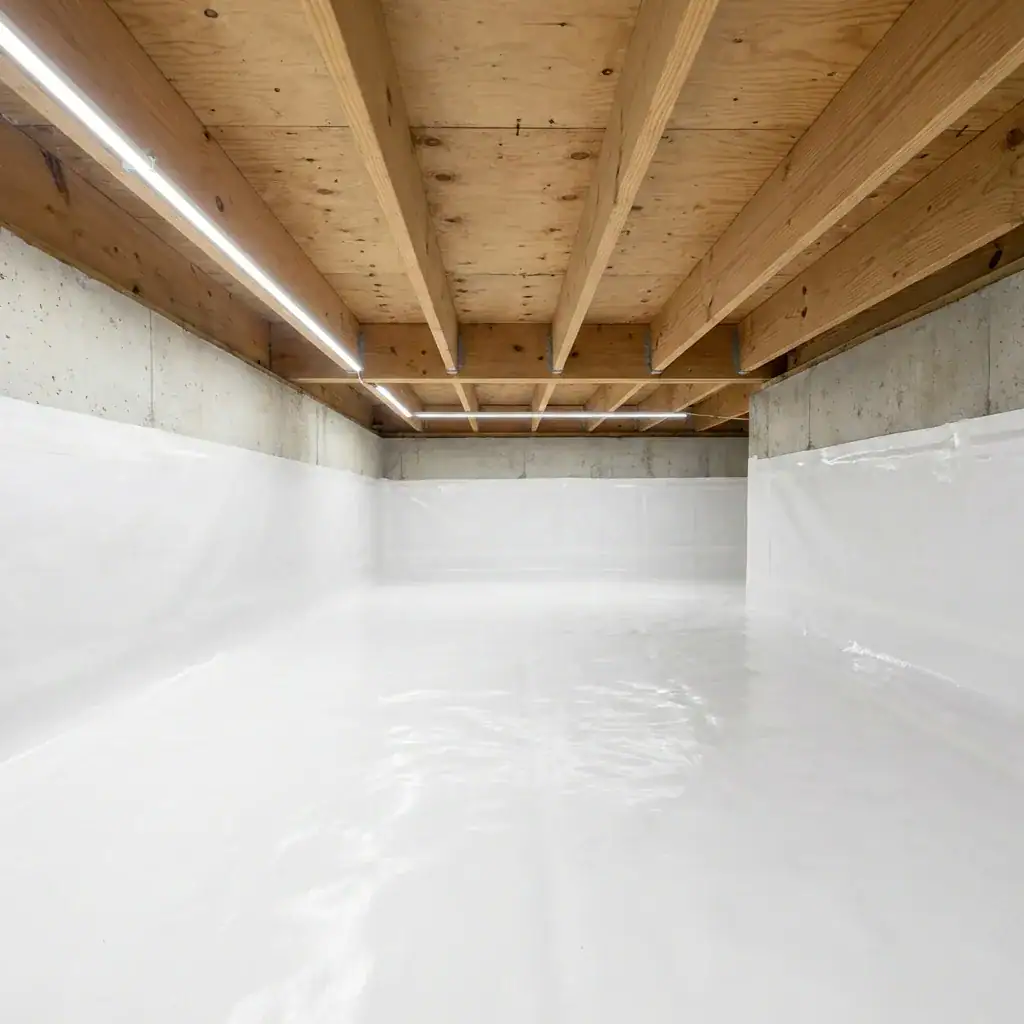
if you have a crawl space. Raised covers, drainage-away-from-vent grading, and in some cases full crawl space encapsulation are the right scope depending on severity.
Yard-scale surface drainage
channel drains at the right locations, catch basins in the low points, or a full yard drainage solution for multi-symptom lots.
If you have had interior water this April, or yard flooding that was clearly worse than previous springs, documenting the conditions now and requesting an inspection before the summer building season gets busy is the most useful thing to do. We map the entire water pathway, exterior, subsurface, and interior, and write a scope that solves the real pattern, not just the symptom you noticed first. In a year like 2026, the diagnostic matters even more than the materials.