Why This Matters in Boise and the Treasure Valley
Most homeowners assume drainage problems come from storms alone. In Idaho, many failures are cumulative and load the property over weeks or months:
Irrigation schedules that exceed soil intake capacity
Seasonal snowmelt and freeze-thaw transitions
Lot grading shifts after construction settlement
Roof runoff concentration near structure-adjacent soils
Soil profiles that move water laterally rather than vertically
That combination is why recurring moisture symptoms often feel random at first. They are not random. They are the result of a system that is overloaded, misrouted, or underbuilt for local conditions.
Idaho Soil and Climate Fundamentals Every Homeowner Should Know
1. Soil Permeability Is Not Uniform Across One Yard
Even one property can contain different soil textures and compaction layers. A lawn zone may absorb water quickly while another saturates after a short cycle. This is common in production neighborhoods where construction traffic and fill behavior vary by location.
2. Moisture Management Is Year-Round, Not Seasonal
Homeowners often think of drainage as a spring issue. In reality, irrigation season in Boise can create longer-duration loading than some rain events. Moisture strategy must cover spring melt, peak summer watering, fall transitions, and winter freeze-thaw.
3. Structure-Adjacent Water Behavior Matters Most
A wet corner in the lawn is inconvenient. Water concentrated near foundations, crawlspaces, basement interfaces, and hardscape edges is a risk issue. Priorities should be set by structural proximity and recurrence pattern.
Diagnostic Framework: Identify Source Water Before Selecting a System
A professional approach starts with one question: where is the water coming from?
Source Category A: Roof Runoff Concentration
Symptoms: pooling at downspout outlets, splashback onto siding, perimeter saturation near corners.
Source Category B: Surface Runoff and Grade Routing
Symptoms: visible overland flow, low-point ponding, runoff crossing patios or walks toward the home.
Source Category C: Subsurface Migration
Symptoms: delayed wetting in lower zones, recurring soggy strips, moisture without obvious topwater flow.
Source Category D: Rising Groundwater/Interior Pressure
Symptoms: basement seepage at wall-floor joints, sump cycling, moisture rise during spring or irrigation season.
Mixed-source properties are common in the Treasure Valley. That is why product-first recommendations fail: the system has to match the source profile.
System Options and Where Each One Fits
Grading and Surface Shaping
Grading is the first defensive layer. Positive slope away from structures reduces perimeter wetting and hydrostatic loading. Regrading should be paired with hardscape pitch checks because settled patios and walks can reverse intended flow.
Downspout Conveyance and Discharge Planning
Downspouts should not terminate near low-grade perimeter zones. Their discharge must be routed to safe, controlled outlets. Short extensions can help temporarily, but long-term performance depends on complete routing strategy.
Surface Drains and Channel Drains
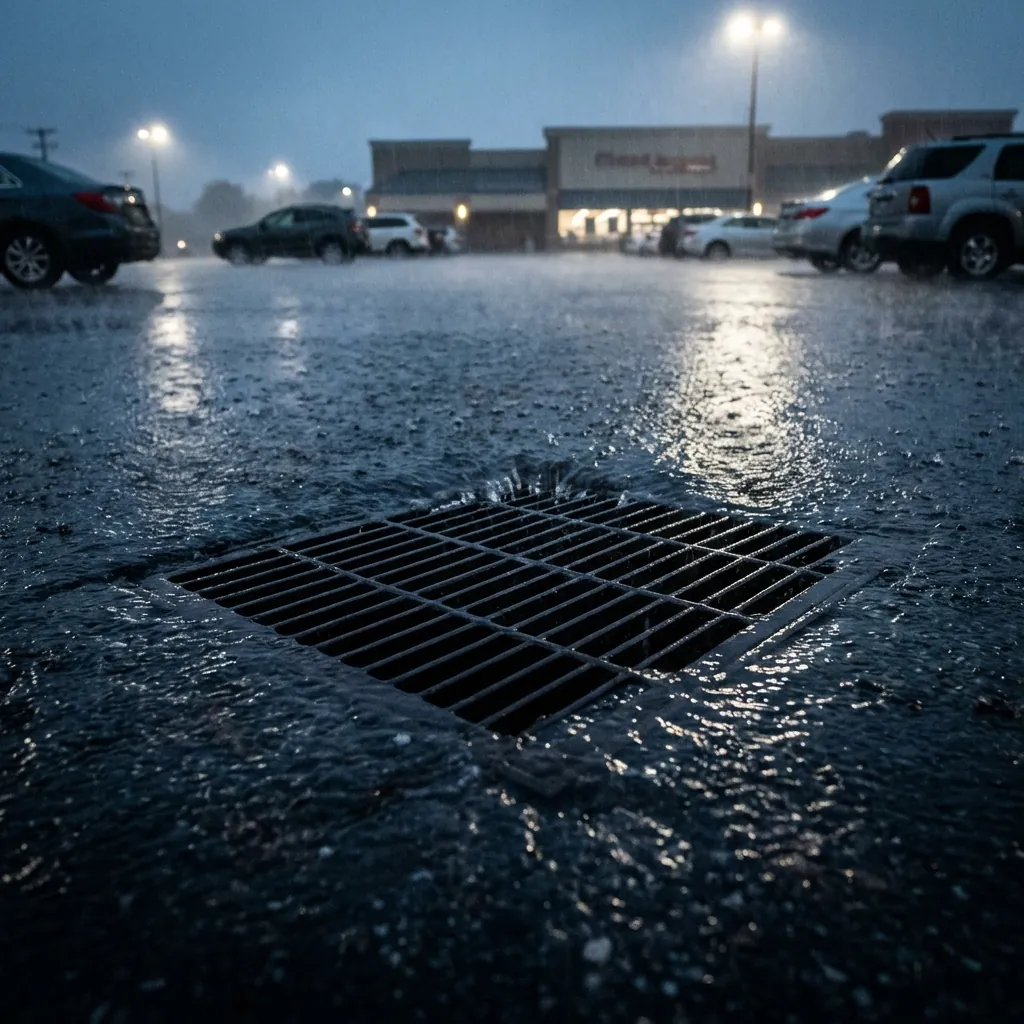
Use these where water is visible at the surface and concentration occurs quickly. They are effective for driveways, patios, and hardscape transitions where collection must happen immediately.
French Drains and Subsurface Interception
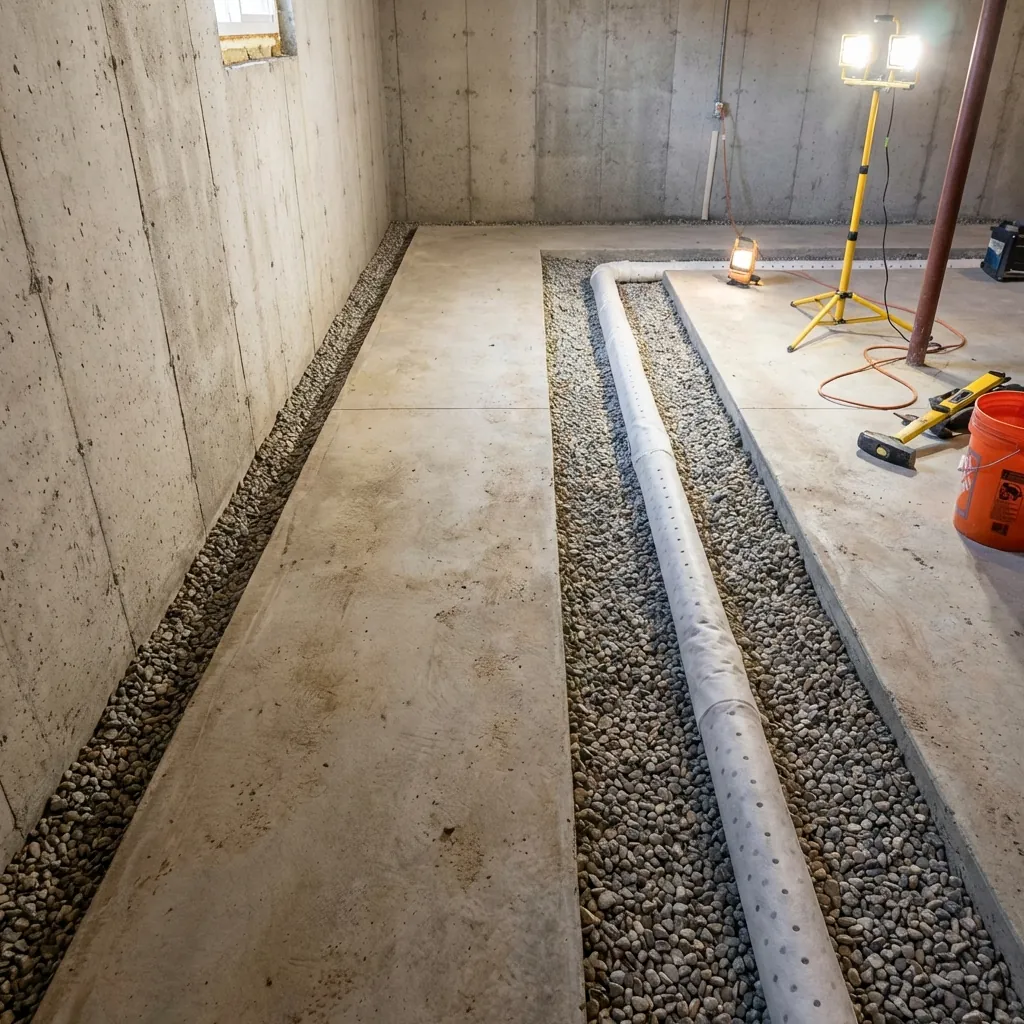
Use these when water moves through soil profiles and repeatedly saturates the same zones. Performance depends on slope, aggregate, geotextile quality, depth alignment, and outlet reliability.
Sump Systems and Active Removal
When water cannot discharge by gravity or rises below grade, active pumping is often required. In higher-risk scenarios, battery backup and maintenance planning are essential components, not optional upgrades.
Crawlspace Moisture Control and Encapsulation
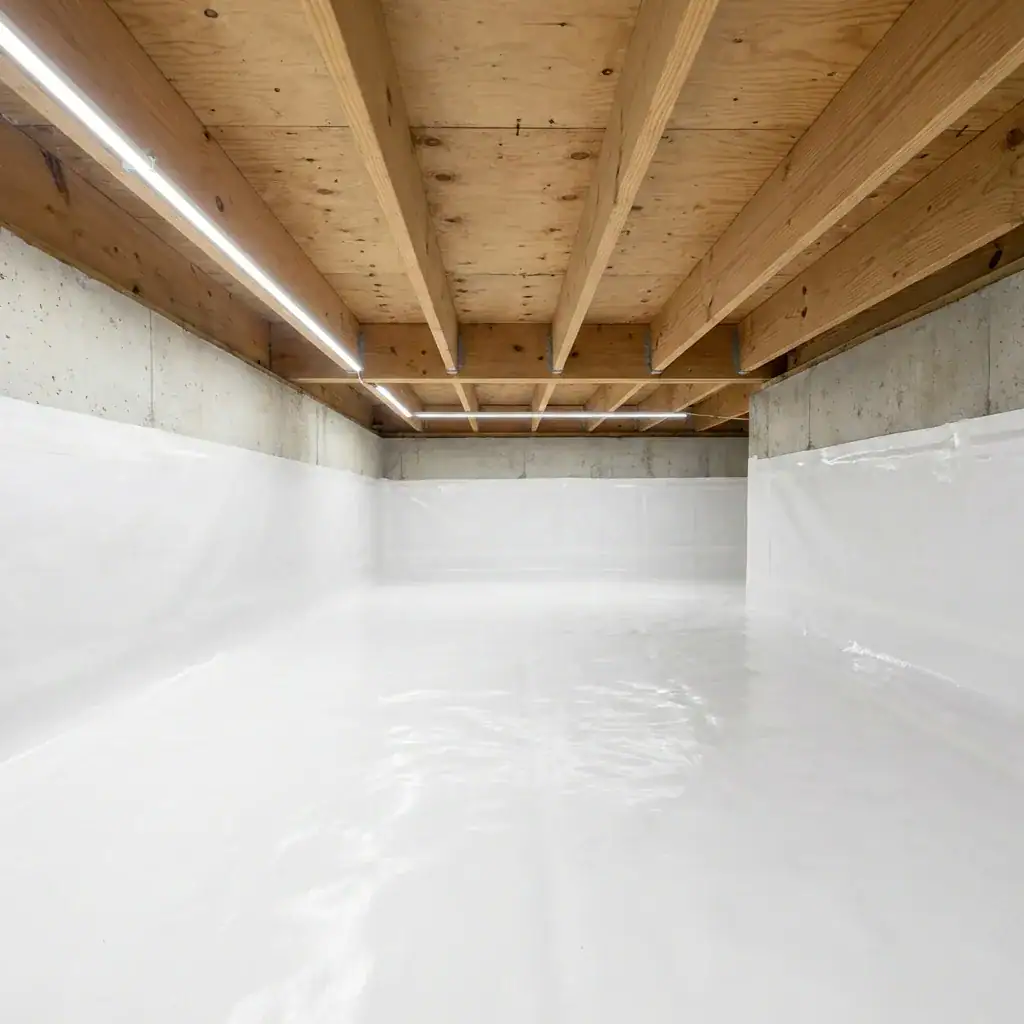
Where under-floor humidity is elevated, design should include bulk water control, vapor management, sealing, and humidity monitoring. Vapor barrier alone is rarely enough in chronic conditions.
Seasonal Playbook for Boise Homeowners
Spring: Snowmelt and First Irrigation Transitions
Verify downspout outlets and clear obstructions
Check known low zones for retention and flow behavior
Inspect basement/crawlspace for first signs of moisture intrusion
Summer: Irrigation-Season Stress Test
Confirm zone runtimes match soil intake rates
Use cycle-and-soak in clay-influenced areas
Watch for recurring soft turf near perimeter zones
Fall: Correction Window
Schedule grading and drainage upgrades before freeze cycles
Clean channels, catch basins, and discharge points
Document repairs and set maintenance baseline
Winter: Freeze-Thaw Protection
Keep discharge pathways functional
Prevent localized icing near foundation edges
Monitor known risk zones after warming events
Neighborhood-Level Risk Patterns Across the Treasure Valley
No two lots are identical, but recurring patterns show up by city and development style. These are not rigid rules, but they help homeowners ask better questions during inspection and planning.
Boise Bench and Older Infill Areas
Older neighborhoods often contain decades of grading changes, hardscape additions, and downspout reroutes. Original drainage assumptions rarely match current conditions. Inspection priorities in these areas should include grade transitions, historic concrete joints, and perimeter low points created by later landscape work.
Meridian and Newer Subdivision Corridors
In newer subdivisions, drainage defects often appear after first-year settlement and full irrigation use. Lots can look fine at close and still reveal recurrent pooling by the second season. Early diagnosis prevents expensive rework after mature landscaping and hardscape investments.
Nampa, Caldwell, and Mixed-Fill Edge Developments
Where lot histories vary, soil behavior can change dramatically across short distances. One side of a yard may absorb water while another remains saturated. Segment-by-segment flow mapping is usually more reliable than broad one-size corrections.
Eagle, Star, and Foothill Transition Areas
Slope-driven flow concentration is common. Upslope interception, retaining-zone drainage, and controlled discharge often matter more than surface cosmetic changes. Homes in these areas need drainage strategies designed for elevation dynamics, not flat-lot assumptions.
Engineering Standards That Matter More Than Product Brand
Homeowners are often sold by product labels, but long-term performance comes from design and installation quality. Idaho Drainage & Foundation Repair emphasizes standards that reduce failure risk across seasons.
Standard 1: Source-Water Matching
Surface runoff should be collected at the surface. Subsurface migration should be intercepted below grade. Rising groundwater requires active removal when gravity discharge is unavailable. System type must match source type.
Standard 2: Slope Verification and Continuity
Minor pitch errors can create stagnant sections, sediment buildup, and early failure. Good scopes include slope verification and post-installation flow testing, not just installation promises.
Standard 3: Filtration and Serviceability
Subsurface systems need proper aggregate, geotextile selection, and cleanout planning. Serviceability is a durability feature. If maintenance access is ignored, lifecycle performance usually declines.
Standard 4: Discharge Legality and Reliability
Every system needs a compliant, reliable discharge destination. If outlet routing is weak or prone to obstruction, the whole system underperforms.
Standard 5: Integration with Irrigation and Hardscape
Drainage cannot be designed in isolation. Irrigation delivery rates, hardscape pitch, and landscaping features can either support or overwhelm drainage infrastructure. Integrated planning is one of the clearest indicators of quality design.
Budget Planning Framework for Homeowners
Instead of relying on one “average cost,” homeowners should budget by risk tier and correction phase.
Tier A (high risk): structure-adjacent moisture, active seepage, and repeated perimeter saturation.
Tier B (moderate risk): recurring yard pooling and runoff patterns not yet affecting interior spaces.
Tier C (optimization): resilience upgrades and lower-priority landscape improvements.
This framework helps protect what matters first. It also keeps projects practical by preventing over-spend on low-risk areas while high-risk conditions remain active.
A strong scope should describe what is fixed now, what can be phased, what verification will be performed, and what maintenance is expected after completion.
Real-World Implementation Examples
Example 1: “Minor” Side-Yard Pooling That Affected Crawlspace Humidity
The visible symptom was a shallow wet area after irrigation. Diagnosis showed grade drift and concentrated downspout discharge near crawlspace vents. Correction included outlet reroute, grade restoration, and targeted subsurface interception. Result: no repeat pooling and reduced humidity trend.
Example 2: Basement Seepage After Cosmetic-Only Crack Sealing
A homeowner sealed interior cracks but seepage returned. Inspection identified sustained perimeter loading and insufficient pressure relief. Combined perimeter collection and active removal resolved recurrence where surface sealing alone did not.
Example 3: New Subdivision Moisture Strip After First Summer
A newer home developed repeating wet turf bands near hardscape transitions. Root cause was irrigation overlap plus settlement-created depressions. Zone tuning and grade correction fixed the issue before broader foundation moisture symptoms developed.
30-60-90 Day Homeowner Action Plan
First 30 Days
Document symptoms with date, time, weather, and irrigation context
Confirm downspout routes and clear obvious obstructions
Reduce obvious overwatering in high-risk zones
Days 31-60
Schedule a professional drainage inspection
Prioritize structure-adjacent moisture risk
Select scope with clear verification criteria
Days 61-90
Complete high-priority corrections
Perform post-installation flow validation
Set seasonal maintenance checkpoints for spring, irrigation season, and winter transition
Cost Planning and Phased Implementation
Homeowners often ask whether to “do everything now” or phase work. The right answer depends on risk concentration:
1. Address structure-adjacent moisture first.
2. Stabilize recurring high-volume source water.
3. Improve lower-risk landscape zones after core protection is in place.
Phased implementation works well when scope is based on risk ranking, not convenience. It is also a practical way to align budget while protecting the home.
Common Decision Errors That Increase Total Cost
Choosing a drain product before diagnosing source water
Treating repeated symptoms as isolated events
Prioritizing cosmetic fixes over moisture control
Underestimating irrigation impact on year-round loading
Delaying inspection until structural symptoms escalate
Inspection Checklist for Homeowners
Use this checklist before requesting proposals:
Where and when does water appear?
How long does pooling persist?
Is moisture closer to landscaping or structure?
Are symptoms seasonal, irrigation-linked, or event-driven?
What prior fixes were attempted and how long did they last?
A documented symptom history improves diagnostic accuracy and helps contractors propose targeted solutions instead of generic scopes.
Implementation Roadmap
Phase 1: Diagnose
Map source water, movement paths, and risk zones.
Phase 2: Prioritize
Protect structural zones first, then recurring high-volume pathways.
Phase 3: Correct
Install grading, collection, and conveyance elements matched to site conditions.
Phase 4: Verify
Perform flow tests and observe behavior after real-world water events.
Phase 5: Maintain
Create a seasonal inspection routine and adjust irrigation with weather and soil response.
Performance Metrics Homeowners Should Track Annually
A drainage strategy is complete only when performance is measured over time. Boise and Treasure Valley homeowners should track these indicators each year:
Retention time: how long water remains in known low zones after irrigation or precipitation.
Perimeter moisture behavior: whether wet bands near foundations are increasing, decreasing, or stable.
Interior symptom frequency: number of seepage, dampness, or musty-odor events by season.
System reliability: whether drains, outlets, and pumps perform consistently during peak load periods.
Maintenance burden: whether debris, sediment, and clogging trends are rising over time.
If these metrics trend in the wrong direction, the system likely needs adjustment before visible damage appears. This is especially important when landscape grading changes, hardscape is added, or irrigation schedules are modified. Many costly failures occur after a “small” property change that unintentionally alters water routing.
Treat drainage reviews like roof or HVAC maintenance: predictable, scheduled, and documented. A short seasonal review preserves system performance, protects structural components, and reduces emergency repair risk.
Final Guidance for Treasure Valley Homeowners
Boise Homeowner’s Guide to Preventing Basement Flooding is ultimately about one principle: water must be diagnosed, directed, and discharged intentionally. When drainage strategy is matched to source water and local soil behavior, homeowners gain more than a drier yard. They gain structural protection, cleaner indoor conditions, and lower long-term repair risk.
Professional drainage inspections can help identify these issues before they cause structural damage. If your property has recurring symptoms, this is the most practical next step.