For decades, the default advice was to vent crawl spaces so they could “breathe.” That approach came from a different era of building science and from climates that do not match ours very well. In Boise, a vented crawl space often becomes a moisture amplifier instead of a moisture relief system. Once you understand why, the logic behind modern encapsulation becomes much clearer.
Why Boise Crawl Spaces Behave Differently
Boise crawl spaces live in a strange balance between desert air above and frequently damp soil below. In summer, the outside air is hot and dry, but sprinklers, irrigation systems, and canal-fed groundwater keep the soil under and around many homes consistently moist. In spring, some neighborhoods experience a noticeable jump in subsurface moisture as irrigation systems come online and water movement through the valley increases. In winter, freezing temperatures and cold air infiltration create a different set of risks.
This means the crawl space is not experiencing one moisture condition. It is caught between multiple conditions at once. The soil may be damp, the framing may be cooler than the outside air, the ductwork may be colder still, and the vents are constantly exchanging air whether that helps or hurts. That combination is exactly why Boise crawl spaces can smell musty in July, feel cold through the floors in January, and still show signs of wood moisture even in a place most people think of as dry.
The local soil profile makes this worse. Clay-heavy ground does not release water quickly. Instead, it holds moisture near the foundation and below the crawl space for longer periods, which increases evaporation from the soil surface inside the crawl space. Even if there is no visible puddle, the moisture load can be substantial.
The Vent Myth
The old vented crawl space model assumes outside air will dry the space. In Boise, that often fails for two different reasons depending on the season. In summer, hot outside air enters a cooler crawl space and can condense on any surface that is below the dew point. That includes metal ducts, plumbing lines, and sometimes the wood framing itself. Homeowners see staining, rust, and even droplets forming on ductwork and wonder where the water is coming from. Often it is being created right there by vented summer air.
In winter, the vents do not remove moisture nearly as effectively as people imagine, but they do bring in freezing air. That cold air lowers floor temperatures, increases heating loss, and raises the risk of frozen pipes. So the vented system performs poorly in both extremes: it adds moisture risk in summer and heat-loss risk in winter.
The bigger problem is that vents do nothing to address ground moisture, which is the dominant issue in many crawl spaces. If the soil is damp, air movement alone is not a reliable moisture-control strategy. It is like cracking a window in a room with a leaking pipe and hoping circulation solves it. The source of moisture remains active, so the symptoms return.
Irrigation Season Changes Everything
One of the most Boise-specific crawl space issues is the effect of irrigation season. When canal systems turn on and neighborhoods begin watering heavily, subsurface moisture conditions can shift fast. Homes that seemed dry in February suddenly show elevated humidity, stronger odors, damp insulation, or even standing water in April or May. That surprises homeowners because the weather may still feel relatively dry at the surface.
In neighborhoods with older irrigation patterns, larger lots, or nearby canal influence, this seasonal shift can be significant. Water moves through the soil, clay layers slow drainage, and the crawl space becomes the low, cool chamber where that moisture expresses itself. Vented crawl spaces are particularly vulnerable because the vents allow the outside air to interact with this rising moisture load without actually sealing the crawl space away from the source.
This is also why some Boise homeowners misdiagnose their crawl space issue as a one-time event. They see moisture only during irrigation season and assume the problem is temporary. In reality, the moisture may be recurring every year on the same schedule. If the crawl space never fully dries, that repeated seasonal exposure gradually affects insulation, framing, air quality, and energy performance.
What Moisture Does to a Crawl Space
Moisture in a crawl space does more than create a bad smell. It changes the environment the entire house sits on. Wood framing absorbs moisture and can stay elevated long enough to support mold growth or fungal decay. Fiberglass insulation sags, traps moisture, and loses insulating value. Metal components corrode. Ductwork sweats. Wiring and plumbing supports age faster in a damp environment.
The damage is often slow, which makes it easy to ignore. A homeowner may not notice the crawl space itself, but they do notice cold floors, higher heating bills, musty closets, cupped flooring, or that familiar damp smell every time the furnace starts. Those are symptoms of below-grade moisture working its way into the living space above.
Over time, chronic crawl space humidity can also contribute to structural concerns. Joists and beams do not need to be visibly rotted for moisture to be a problem. Repeated seasonal wetting is enough to change wood moisture content, encourage microbial growth, and create long-term durability issues. By the time obvious deterioration is visible, the crawl space has usually been telling the story for years.
Why Mold and Odors Move Upstairs
Homeowners sometimes assume a crawl space is isolated from the house. It is not. The stack effect means air inside the home naturally rises and escapes at upper levels, which pulls replacement air from lower parts of the structure. In a house with a vented, damp crawl space, that lower-level air often comes straight through penetrations, gaps, and the floor assembly into the living space.
That is why crawl space odors do not stay in the crawl space. The smell of damp soil, mold, or decaying insulation gets pulled upstairs. It is also why indoor air quality complaints often improve quickly once a crawl space is sealed and dried. You are not just changing the space under the house. You are changing one of the air sources the house has been using all along.
This issue matters even more in Boise homes that have older floor systems or multiple penetrations for plumbing, wiring, and HVAC. The more leakage paths there are between the crawl space and the house, the easier it is for moisture-laden air to migrate upward. If anyone in the home has asthma, allergies, or sensitivity to musty air, crawl space conditions can have an outsized effect on comfort.
What Encapsulation Actually Includes
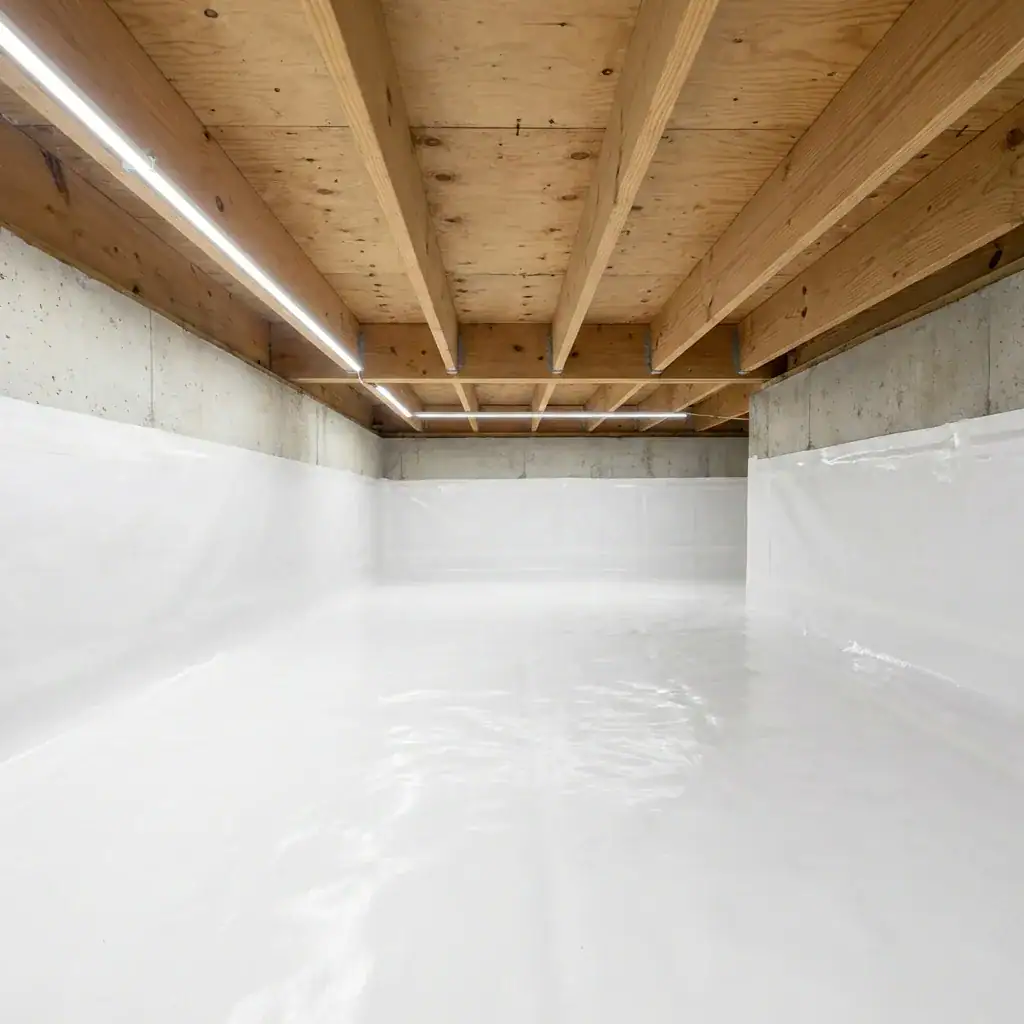
A true crawl space encapsulation is more than a sheet of plastic tossed across the ground. It is a system. The soil is first isolated with a heavy vapor barrier, typically a reinforced membrane such as 20-mil material. That liner is sealed at seams, carried up the walls and piers, and detailed around penetrations so ground vapor cannot simply bypass it. Vents are sealed, because leaving them open defeats the purpose of controlling the air environment.
Insulation strategy matters too. In a properly encapsulated crawl space, the goal is usually to treat the crawl space as part of the conditioned building envelope. That means insulating and air-sealing the perimeter walls rather than hanging insulation loosely under the floor and hoping it survives a damp environment. Depending on the project, the encapsulated space may also include conditioned air or dedicated dehumidification to maintain stable humidity.
When done correctly, encapsulation changes the crawl space from an outdoor environment under the house into a controlled buffer space. Floors feel warmer, humidity drops, odor decreases, and the structural framing is no longer cycling through the same moisture extremes. That is why modern building science treats encapsulation as a performance upgrade, not merely a cosmetic cleanup.
When Drainage Comes Before Encapsulation
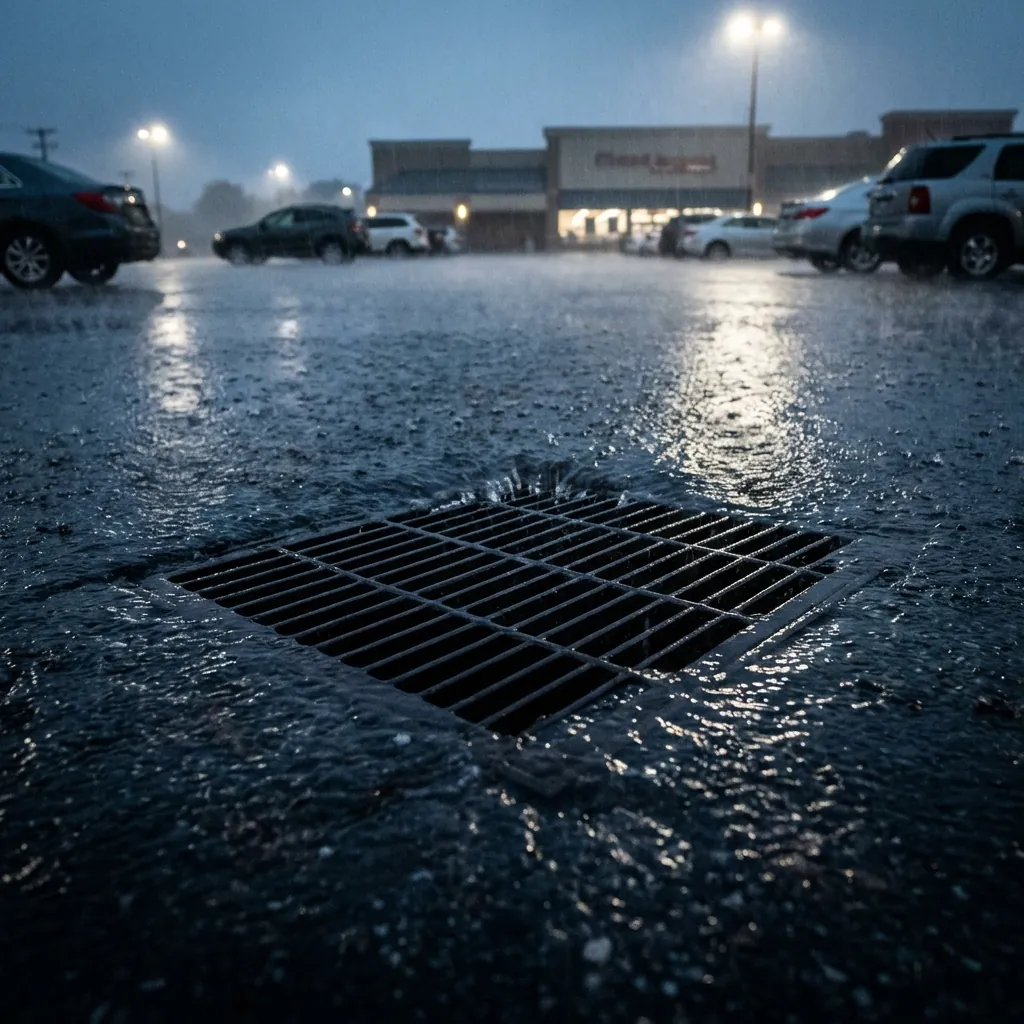
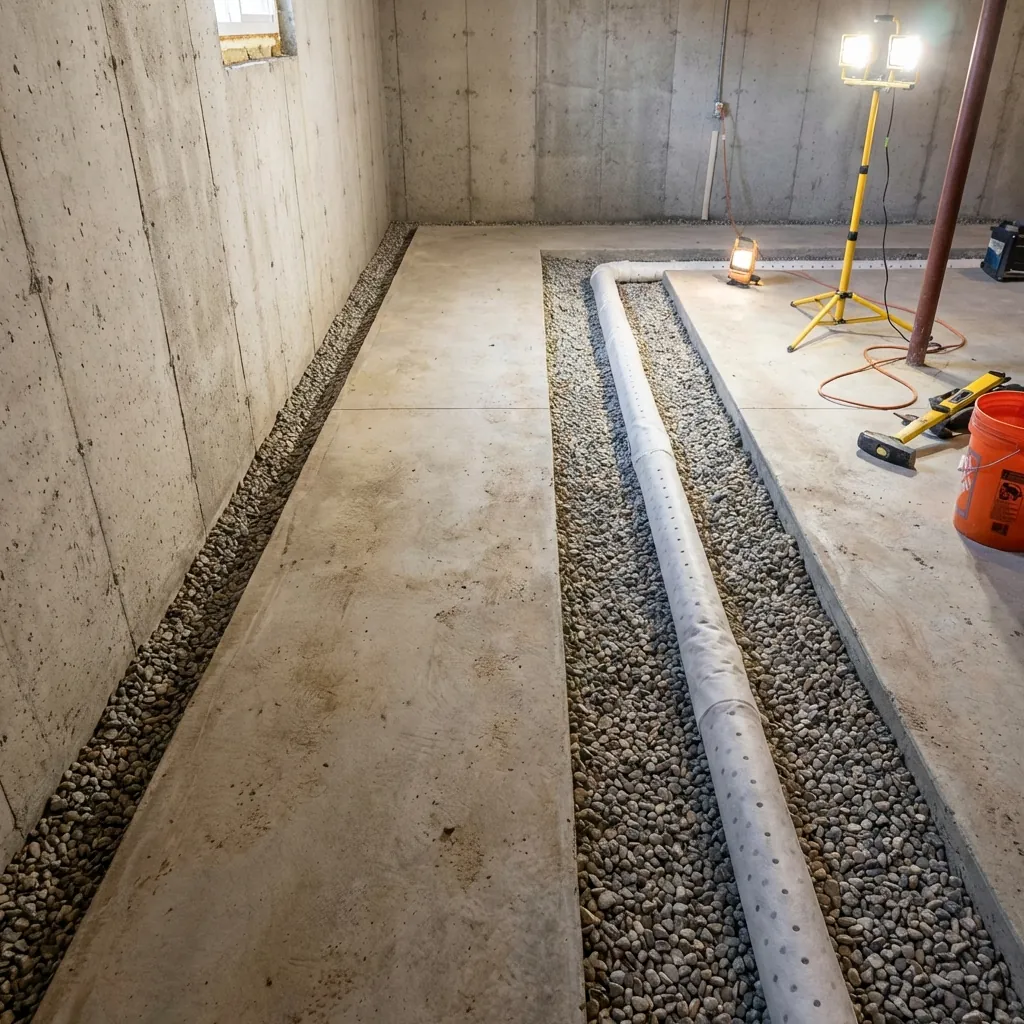
Encapsulation is powerful, but it is not magic. If liquid water is actively entering the crawl space, drainage corrections usually need to happen first. That may mean a perimeter drain inside the crawl space, a sump basin and pump, exterior grading corrections, or a French drain outside where water is loading the foundation. Putting an expensive liner over active water entry without solving the drainage path is not a durable strategy.
This sequencing matters a lot in Boise because some crawl spaces are dealing with both vapor and bulk water. The vapor barrier solves the vapor component. It does not erase hydrostatic pressure or groundwater rise. If the space sees standing water during spring irrigation or after major storms, the system design has to include collection and discharge for that liquid water before the encapsulation can deliver its full benefit.
That is one reason drainage specialists are often better equipped for crawl space work than companies that only install liners. The liner may be one component, but the real question is what water is doing under and around the home. If the answer includes groundwater, perched water, or exterior runoff, the drainage layer has to be designed along with the encapsulation layer.
What Homeowners Should Watch For
Most crawl space problems announce themselves upstairs long before the homeowner crawls under the house. Persistent musty odor, cold floors in winter, unexplained allergy irritation, condensation on ducts, rising humidity, sagging insulation visible through access openings, or white fungal-looking growth on framing are all warning signs. Water staining on foundation walls or damp soil that never seems to dry are even stronger signals.
Seasonal patterns are particularly helpful. If the home smells worse when the canals turn on, if the floors feel colder during windy winter weather, or if humidity spikes in summer despite a dry climate, the crawl space should move to the top of the inspection list. Boise homeowners are often surprised by how much house comfort improves once the space below is finally controlled.
We also encourage homeowners to think about crawl spaces as systems that benefit from inspection, not places that should be ignored once a liner is installed. Plumbing leaks, disconnected dryer vents, failed duct insulation, and pest activity can all reintroduce moisture or contamination even in an encapsulated space. A quick annual look, especially before and after irrigation season, helps catch small issues while they are still small. That is a much better outcome than assuming the crawl space is permanently solved and discovering a new problem only after odors or humidity return upstairs.
Older Boise homes deserve extra attention here because many were built with crawl spaces that reflect outdated assumptions about venting, insulation, and moisture control. Those homes are not doomed, but they do benefit from a modern evaluation that looks at drainage, air sealing, vapor control, and structural condition together. When owners take that broader view, crawl space work stops feeling like a niche repair and starts functioning as whole-house protection for comfort, energy use, and long-term durability.
That broader view is what turns crawl space work from a cleanup project into a long-term building-performance upgrade. When the moisture source is controlled, the air is sealed, and the space is kept dry through Boise’s seasonal swings, the home above becomes more stable in every practical way homeowners care about.
The larger point is simple: crawl spaces in the Treasure Valley need a design that matches Treasure Valley conditions. Open vents and wishful thinking are not enough. A crawl space should be separated from wet soil, protected from seasonal groundwater changes, and sealed so the house above is not constantly inhaling whatever is happening below. When that is done correctly, the improvement is not just under the floor. It is felt throughout the entire home.