
Engineered Water Control for Treasure Valley Properties
Drainage in Boise is not a single-product decision. It is a site-engineering decision that has to account for elevation, soil behavior, roof runoff volume, landscape grading, and how water can legally discharge without creating risk for your structure or your neighbors. Idaho Drainage Solutions builds full-property systems that are designed around how water actually moves through your lot during spring thaw, irrigation season, and major rain events.
Executive Summary: How We Solve Drainage Problems
Most properties we inspect already have partial fixes in place: a short downspout extension, a single basin, a swale that used to work, or a sump discharge that solves one corner while overloading another. Those isolated corrections can help temporarily, but they usually fail when they are not integrated into one complete flow path. Our approach is to map the whole site first, identify where water starts, where it accelerates, where it stalls, and where it can be safely released, then design one coordinated system instead of patching one symptom at a time.
The result is a drainage plan that protects usable yard space, reduces moisture pressure against foundation walls, and remains serviceable over years of seasonal change. That matters in Treasure Valley because soil moisture does not behave the same in January, April, and August. Good systems are designed to perform across all three conditions, not just the weather pattern you happen to be seeing today.
Why Drainage Fails in Treasure Valley
In Ada and Canyon counties, drainage failures are typically driven by combinations of grade, soil, and seasonal loading. A lot can look dry in midsummer while still carrying unresolved drainage risk that appears the moment snowmelt and spring storms overlap. We regularly see problems develop where newer neighborhoods transition from compacted builder backfill to native soils, because those zones absorb and release moisture at different rates and create uneven flow behavior around foundations and hardscape.
Foothill-adjacent homes also deal with concentrated runoff energy. Even modest slope can push water quickly toward low landscape pockets, retaining walls, and crawl space perimeters if intake points are undersized or poorly located. For context on regional climate and water patterns, we reference NOAA climate data and USGS water resources when evaluating timing and runoff behavior.
Another frequent issue is irrigation-driven saturation. During summer, repeated watering can keep shallow soils wet for weeks, especially in clay-leaning zones. That continuous moisture cycling can increase foundation stress and lead to recurring crawl space humidity, even when no major storm event occurred. This is why proper drainage design in Boise has to address stormwater and irrigation water together.
Soil Behavior: Why Clay Changes the Design
Many property owners hear the phrase "expansive soil" but do not get a practical explanation of what it means for drainage design. In simple terms, clay-rich soils can absorb water, swell, and reduce permeability at the same time. As those soils dry, they shrink and open pathways that later refill with the next water cycle. That swell-shrink pattern is one reason moisture-related structural movement can look intermittent instead of constant.
When we design drainage for clay-influenced sites, we prioritize early collection and controlled conveyance to reduce how long water stays near footing zones. We also evaluate discharge distance and outlet protection to prevent re-infiltration near the same structure. Soil context from the USDA Web Soil Survey helps confirm local conditions, but field behavior on the actual lot still drives final design decisions.
If your property already shows movement indicators such as cracking, sticking doors, or slab elevation differences, drainage work should be coordinated with structural review. In those cases we pair water management with foundation repair planning so hydrology correction and structural stabilization are working together rather than in separate phases that compete with each other.
Our System Design Framework: Intake, Conveyance, Discharge
Every effective drainage system has three non-negotiable parts: intake points where water is collected, conveyance lines that move it, and discharge controls that release it safely. Most long-term failures happen when one of those three elements is missing or undersized. A basin without adequate pipe slope simply stores water. Pipe without proper intake allows ponding. Discharge without outlet protection can cause erosion and backflow risk.
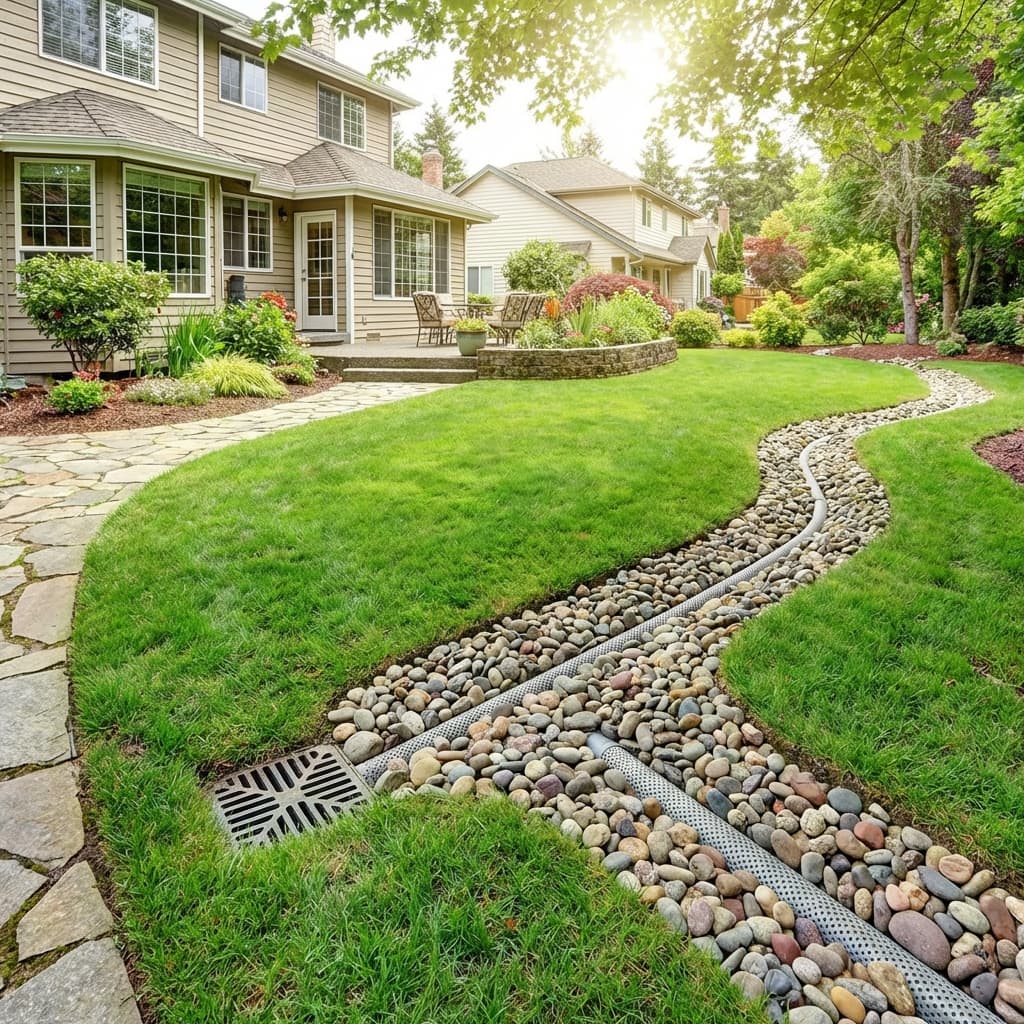
For paved and hardscape concentration points, we often use channel drains or catch basins sized to expected flow volume and debris load. For landscape saturation zones, we build yard drainage systems that intercept water before it reaches footing-adjacent soil. Roof water is handled through downspout extension routing designed around verified discharge paths, not assumptions about where water might disappear.
Where slope and retaining conditions create hydrostatic pressure risk, we integrate retaining wall drainage and, when needed, complementary erosion control so high-velocity flows do not undermine landscape, hardscape, or wall stability over time.
Installation Standards and Field Workflow
Execution quality is as important as design quality. A technically correct layout can still fail if trench depth, slope consistency, compaction practices, or cleanout access are not handled correctly in the field. Our crews install with long-term serviceability in mind, which means pipe runs are built for inspection access, outlets are protected, and transitions are completed so the system can be maintained rather than abandoned when debris builds over time.
Before closeout, we confirm flow direction and identify maintenance points for the homeowner. This step is critical because drainage is not "install and forget." Like any mechanical or hydrologic system, it performs best when intake areas are kept clear and seasonal inspections are done before peak water periods. We provide those recommendations as part of every completed project.
Residential vs. Commercial Drainage Priorities
Residential drainage work is usually centered on foundation protection, yard usability, and preventing recurring crawl space or basement moisture. Commercial and HOA projects involve additional priorities such as liability exposure, paved-area runoff concentration, traffic-loading considerations, and documented maintenance access. The design language changes because the risk profile changes.
For commercial and managed properties, we coordinate around compliance expectations and discharge controls that align with applicable guidance. If your project involves larger paved catchments, shared property boundaries, or formal stormwater requirements, review our commercial stormwater compliance services for planning support.
Code, Discharge, and Compliance Considerations
Drainage improvements should do more than move water quickly. They should move water responsibly. We build systems around practical compliance principles so water is redirected without creating downstream nuisance conditions, erosion, or avoidable code conflicts. Local guidance and state resources help establish project boundaries, but the final layout is always engineered to the specific lot.
Key references include Boise Public Works drainage guidance and Idaho DEQ stormwater resources. Homeowners and property managers can review those here: City of Boise Drainage Information and Idaho DEQ Stormwater Program.
Cost Modeling and Project Phasing
Drainage cost is driven by site complexity, not just pipe length. The largest cost variables are usually excavation access, number of intake locations, discharge distance, restoration scope, and whether related structural moisture conditions need parallel correction. Transparent pricing means showing which components solve immediate risk and which improvements are optional upgrades for future resilience.
When needed, we phase projects by risk tier. Phase one typically addresses the highest-consequence pathways first, such as water trending toward foundation zones or repeated ponding near living spaces. Phase two expands system coverage for full-lot optimization. This phased approach lets homeowners correct critical risks now while planning broader improvements on a practical timeline.
Maintenance Expectations for Long-Term Performance
Well-designed drainage systems are durable, but they are not maintenance-free. Catch basins should be checked for sediment and organics. Outlets should be verified before spring runoff. Downspout discharge routes should be reviewed after landscape or hardscape changes. An annual inspection cycle prevents small service issues from becoming large water failures during high-load weather periods.
If your home already has below-grade moisture symptoms, drainage improvements should be coordinated with envelope protection. We commonly pair site drainage with basement waterproofing, crawl space drainage controls, and structural moisture corrections as needed. Solving the water path outside while ignoring conditions inside the building envelope is an incomplete fix.
Free Property Drainage Inspection
We document intake points, runoff direction, soil saturation zones, and discharge constraints, then deliver a clear plan with prioritized options so you can fix the highest-risk issues first and build long-term protection for your property.
Common Failure Signs in Boise
Recurring Yard Flooding
Standing water returns after storms, irrigation, or spring snowmelt.
Foundation Moisture Risk
Water movement is trending toward footings, crawl spaces, or basement walls.
Drainage System Fragmentation
Disconnected fixes are shifting water problems to new locations.
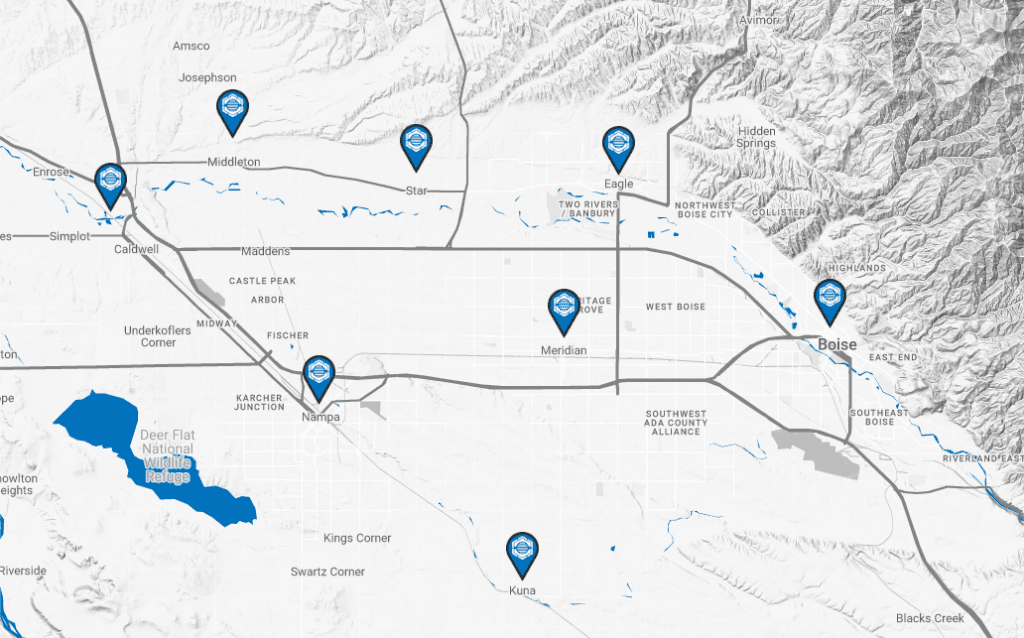
Serving All of Boise & The Valley
Our structural specialists are in Boise daily.
Boise Drainage Solutions FAQ
How do I know whether I need drainage or waterproofing?
Can drainage be done in phases?
Do drainage systems need annual service?
Will drainage work help foundation movement?
What Boise Homeowners Say
"They explained the whole water path on our lot and fixed the cause, not just one puddle."
"Clear plan, fair price, and the work held up through spring runoff."
"Best drainage contractor we interviewed. Technical, practical, and professional."
Why Choose Idaho Drainage Solutions?
Licensed & Insured
Fully licensed in Idaho (RCE-57554) with comprehensive liability coverage for your protection.
Prompt Scheduling
We respect your time. Appointments scheduled within 24-48 hours for most estimates and inspections.
Satisfaction Guaranteed
We stand behind our work with industry-leading warranties and a commitment to getting it right.
Local Expertise
We know Treasure Valley soil, water tables, and building codes better than anyone.
No-Surprise Pricing
Clear, upfront quotes with no hidden fees. The price we quote is the price you pay.
Free Consultations
Every project starts with a free on-site evaluation. No pressure, just honest advice.

0% Interest Financing Available
Flexible payment options for your drainage projects.
Related Services in Boise
PROTECT YOUR HOME
Don't let a small issue turn into a structural failure. Schedule your free evaluation now.